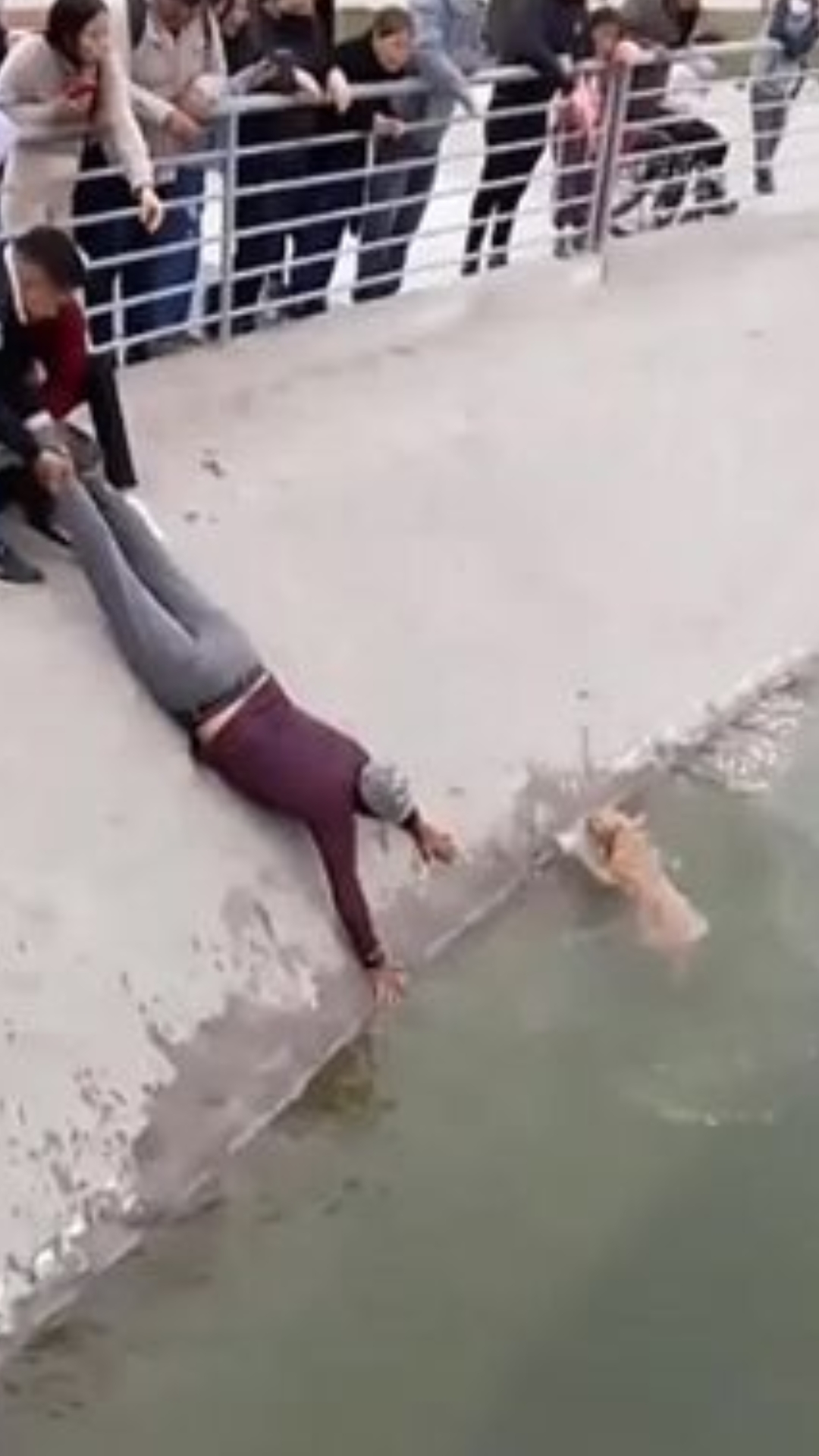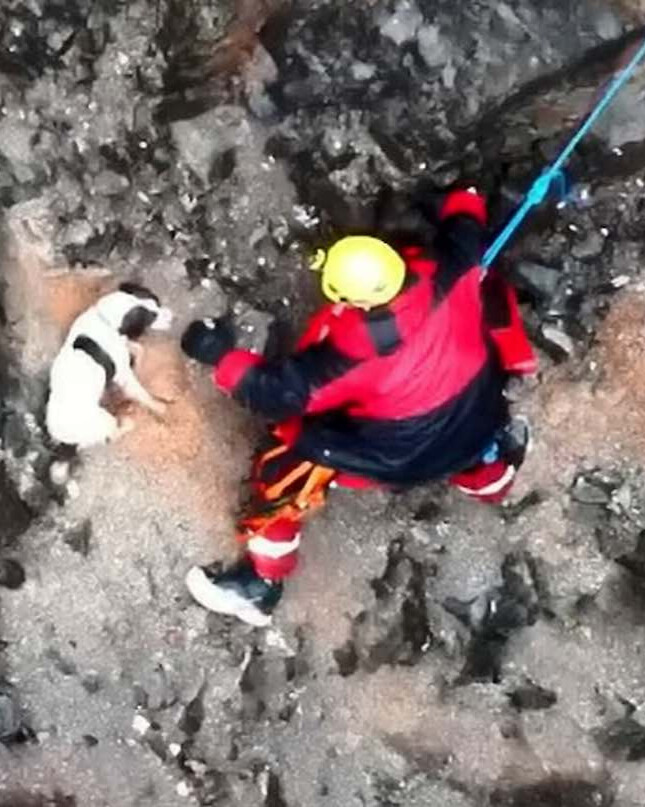



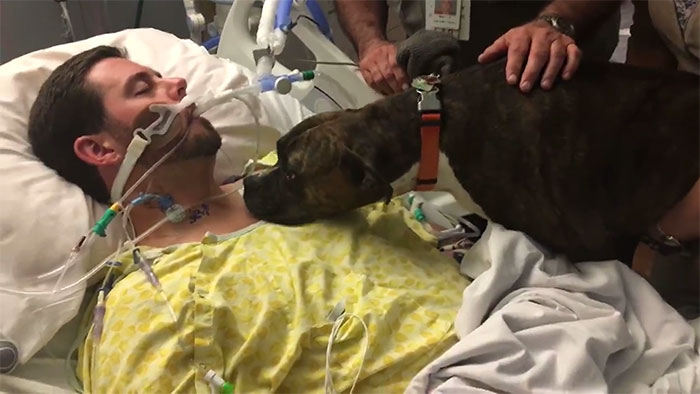



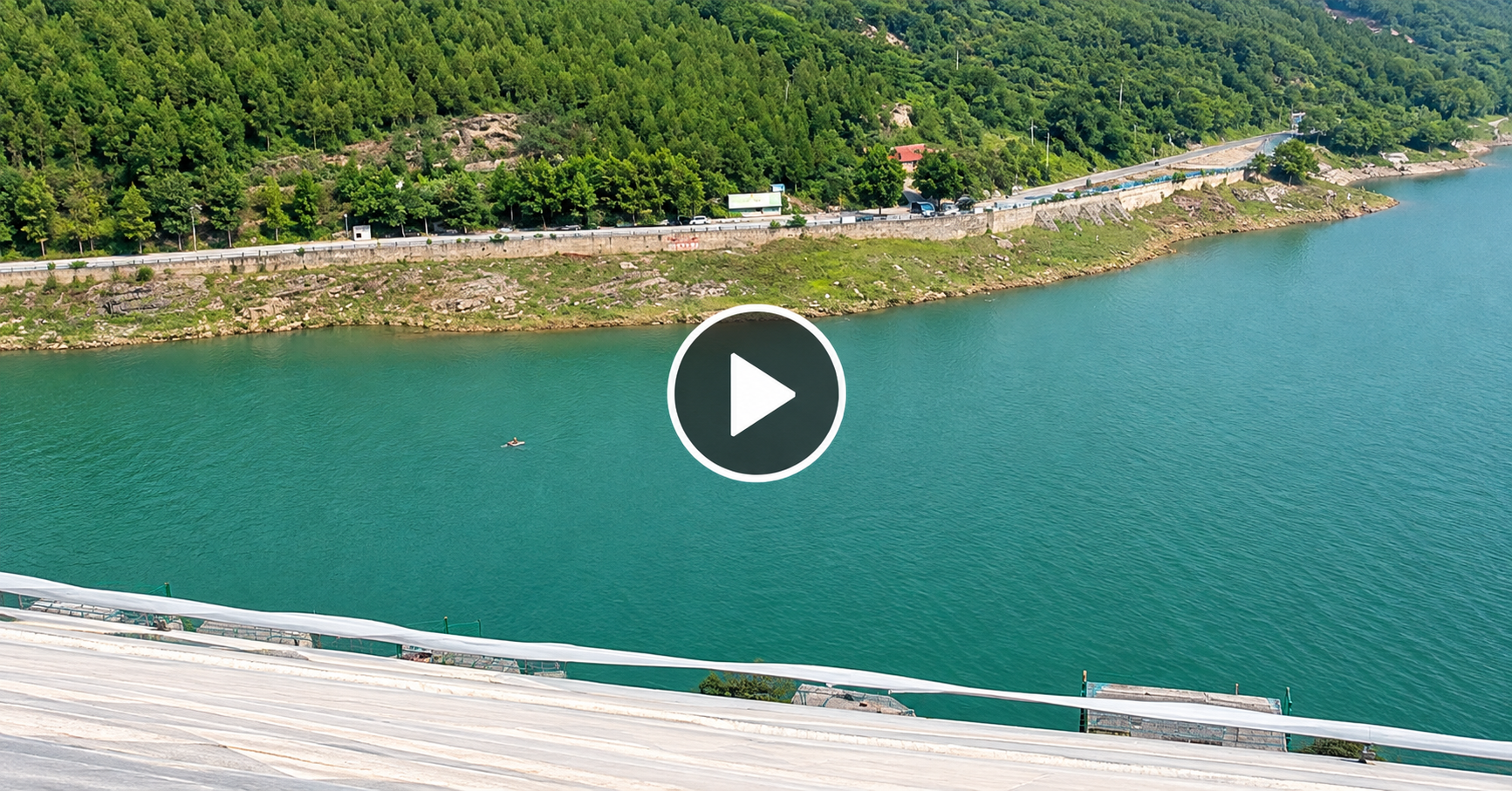
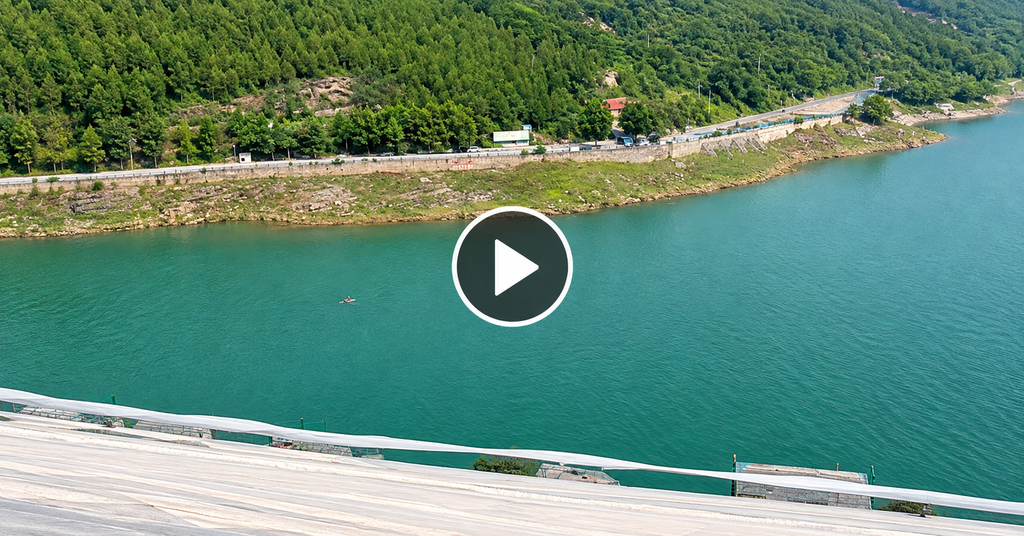
A peaceful day can change unexpectedly when a curious puppy finds itself in an unfamiliar or dangerous place. In a video described as showing a small dog falling into a reservoir, the puppy appears to struggle in the water and tries to stay afloat. The situation is a reminder that even a brief moment near a deep water source can create serious risks for young animals, making supervision and preventive measures essential for every pet owner.
Puppies are naturally curious, and they often explore their surroundings without fully understanding the dangers around them. A reservoir may look calm from the edge, but its depth, steep banks, and slippery surfaces can make it difficult for a small animal to get out after falling in. Unlike a shallow puddle or a specially designed pet pool, a reservoir is not a suitable place for an unsupervised puppy to explore.
The description accompanying the video indicates that the puppy was struggling after entering the water. Without additional verified information, it is not possible to determine exactly how the incident happened or what became of the dog afterward. However, the situation highlights an important concern for anyone who brings a pet near a lake, reservoir, river, or other body of water: prevention is far safer than trying to respond after an animal has fallen in.
Young dogs may not yet have the coordination, experience, or confidence needed to navigate unfamiliar environments. Even puppies from breeds that are comfortable around water can become frightened when they unexpectedly enter a deep area. Their movements may become less controlled as they try to stay afloat, and they may have difficulty finding a safe route back to shore.
A reservoir can present additional challenges because the shoreline is not always easy to climb. Some areas have steep concrete edges, muddy banks, loose stones, or surfaces that become slippery when wet. A puppy may be able to see the shore but still struggle to reach it, particularly if the water is deep or the nearest exit is beyond its swimming ability.
For people who witness a dog in trouble, the natural reaction is often to help immediately. Compassion is important, but rescuers should also consider their own safety before taking action. Entering deep or unfamiliar water without proper training and equipment can put another person in danger, so contacting emergency responders or trained animal rescuers is often the safest choice.
If the puppy is still in the water, bystanders should alert nearby people and contact the appropriate local emergency service when necessary. They can provide useful information about the animal’s location and identify accessible areas where trained responders might approach safely. Any attempt to assist from the bank should avoid creating further danger, and people should not assume that a seemingly calm surface means the water is safe to enter.
Pet owners can reduce the likelihood of such incidents by keeping dogs under close supervision around reservoirs and other deep water sources. A secure leash and a well-fitted harness can help maintain control in suitable public areas, although equipment should never be used in a way that creates a risk of entanglement near water. Owners should also keep pets away from unprotected edges and avoid allowing puppies to wander freely near places where a fall could occur.
It is useful to plan outdoor activities with the dog’s age and experience in mind. A young puppy may be better suited to a fenced garden, a quiet walking path, or another environment where the owner can control the surroundings. If a dog is introduced to swimming, the activity should take place in an appropriate, supervised location with a gradual entry and a safe way to leave the water.
Owners should never assume that all dogs instinctively know how to swim safely. Some dogs are confident in the water, while others are nervous or physically unsuited to swimming for extended periods. Even dogs that swim well can become tired, disoriented, or overwhelmed by unfamiliar conditions, so close supervision remains necessary throughout any water-based activity.
The incident also illustrates why pet safety education matters. Families can teach children not to approach deep water with a dog without an adult and to alert a responsible person if an animal falls in. Simple habits, such as keeping gates closed, checking fences, and identifying potential hazards during walks, can prevent many avoidable accidents.
If a puppy is brought out of the water, the next step should be to assess its condition carefully. An animal that has struggled in the water may be exhausted or stressed, and problems related to water inhalation may not always be obvious immediately. If the puppy has difficulty breathing, persistent coughing, unusual weakness, confusion, or other concerning symptoms, it should receive prompt veterinary attention.
Even when a dog appears to recover quickly, owners should not dismiss unusual behavior after a water-related incident. A veterinarian can assess the animal and advise whether monitoring or additional care is necessary. Keeping the puppy warm and calm while arranging appropriate assistance may help, but home care should not replace professional evaluation when there is a possibility of a serious problem.
Reservoir safety is not only a concern for pet owners. People who visit these locations for walking, fishing, photography, or recreation should pay attention to warning signs and follow local access rules. Barriers and restricted areas often exist because the terrain or water conditions may be hazardous, even when the location looks peaceful.
Videos showing animals in difficult situations can encourage important conversations about prevention and responsible care. At the same time, short recordings rarely provide every detail about how an incident began or what happened afterward. Sharing such footage responsibly means avoiding unsupported claims, respecting the people and animals involved, and focusing on practical lessons that may help prevent similar situations.
For many families, a puppy is much more than a pet. It is a developing companion that relies on people for food, shelter, medical care, and protection from hazards it cannot understand. Building a safe environment is part of that responsibility, and it includes anticipating risks before an outing begins rather than reacting only after something goes wrong.
A simple pet emergency plan can make a difference when unexpected events occur. Owners can keep a veterinarian’s contact information accessible, learn which local services respond to animal emergencies, and make sure identification details are current. These preparations may seem ordinary, but they can save valuable time when a pet needs help.
The most important lesson from a puppy struggling in a reservoir is the need to take water hazards seriously. Deep water should never be treated as a safe place for an unattended animal, and even a brief lapse in supervision can have serious consequences. By choosing safer locations, maintaining control near water, and seeking trained help when emergencies arise, people can reduce risks to the animals that depend on them.
Although the puppy’s final condition is not confirmed by the available description, the incident encourages a useful reminder for every dog owner: curiosity should be met with protection, not unnecessary risk. Puppies need time to learn about the world, and they depend on their caregivers to guide them away from hazards. With thoughtful preparation, attentive supervision, and prompt professional assistance when needed, people can help their pets enjoy a safer life and many more happy days ahead.