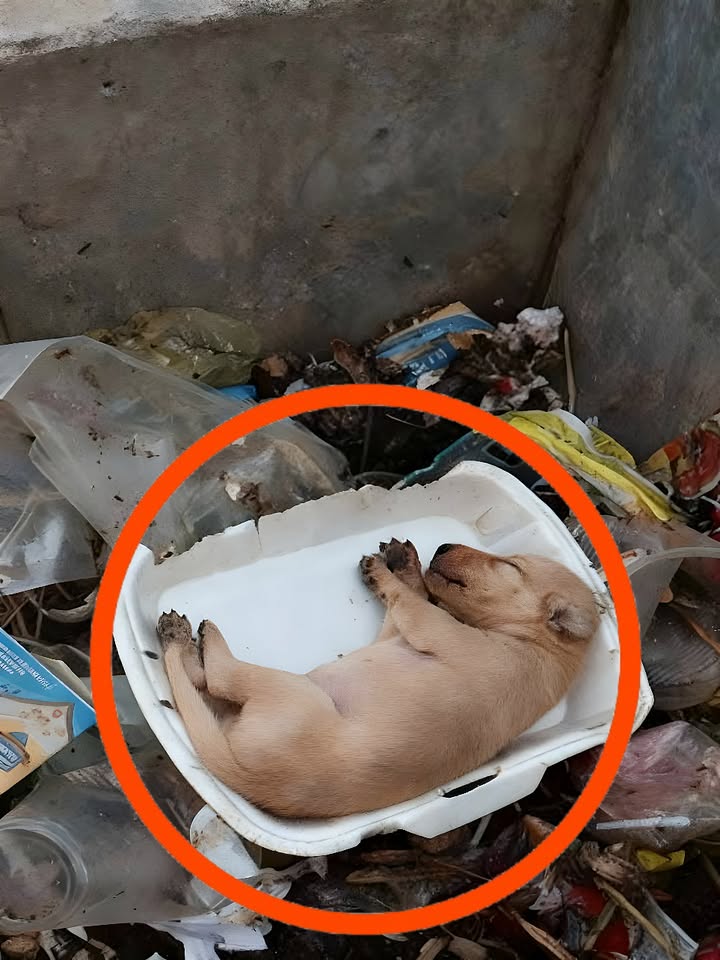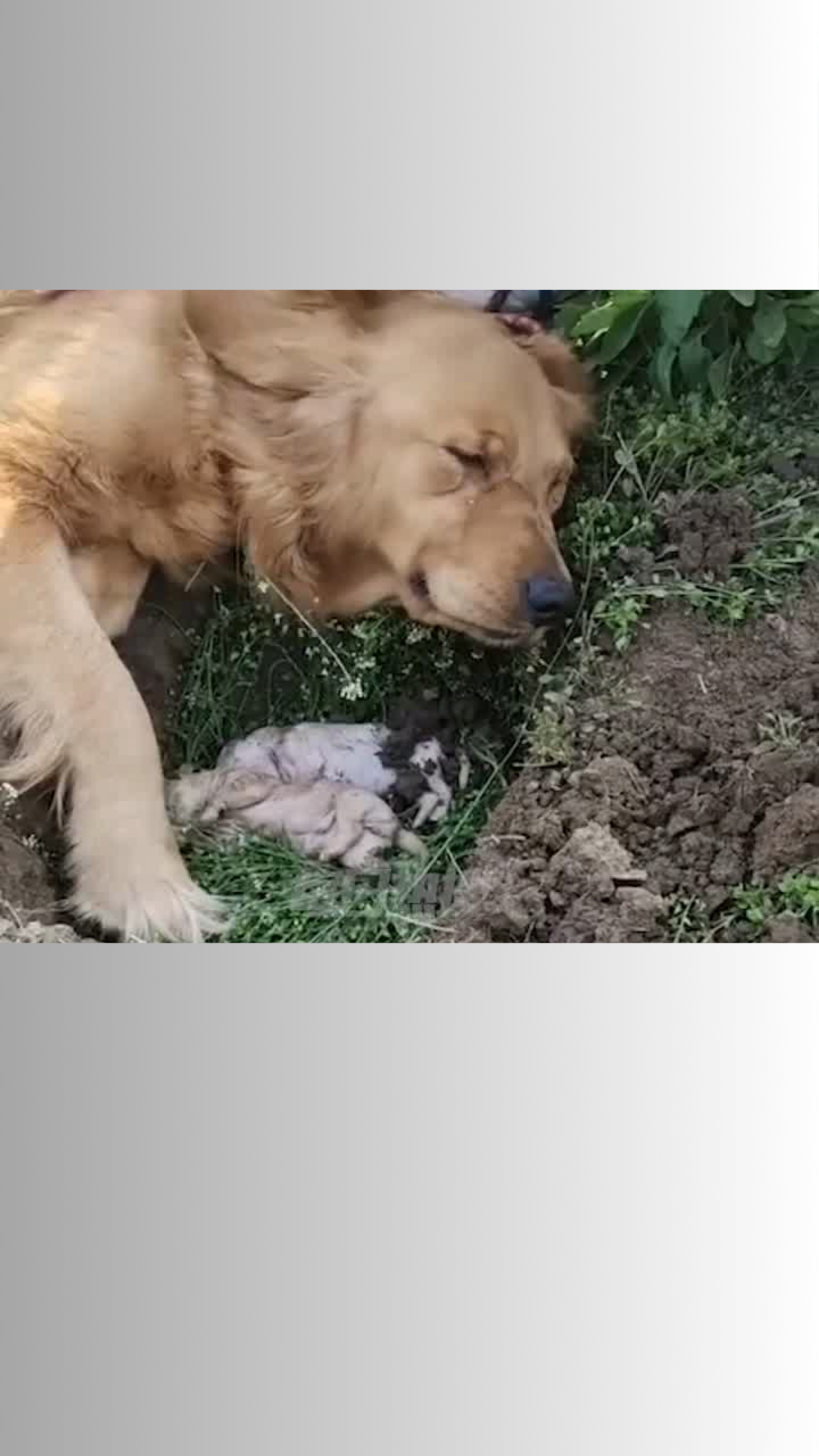
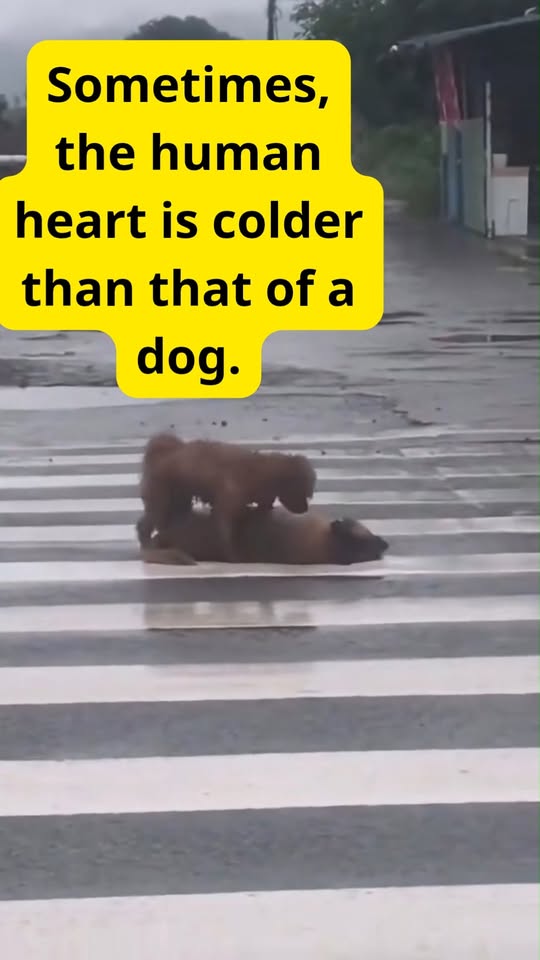



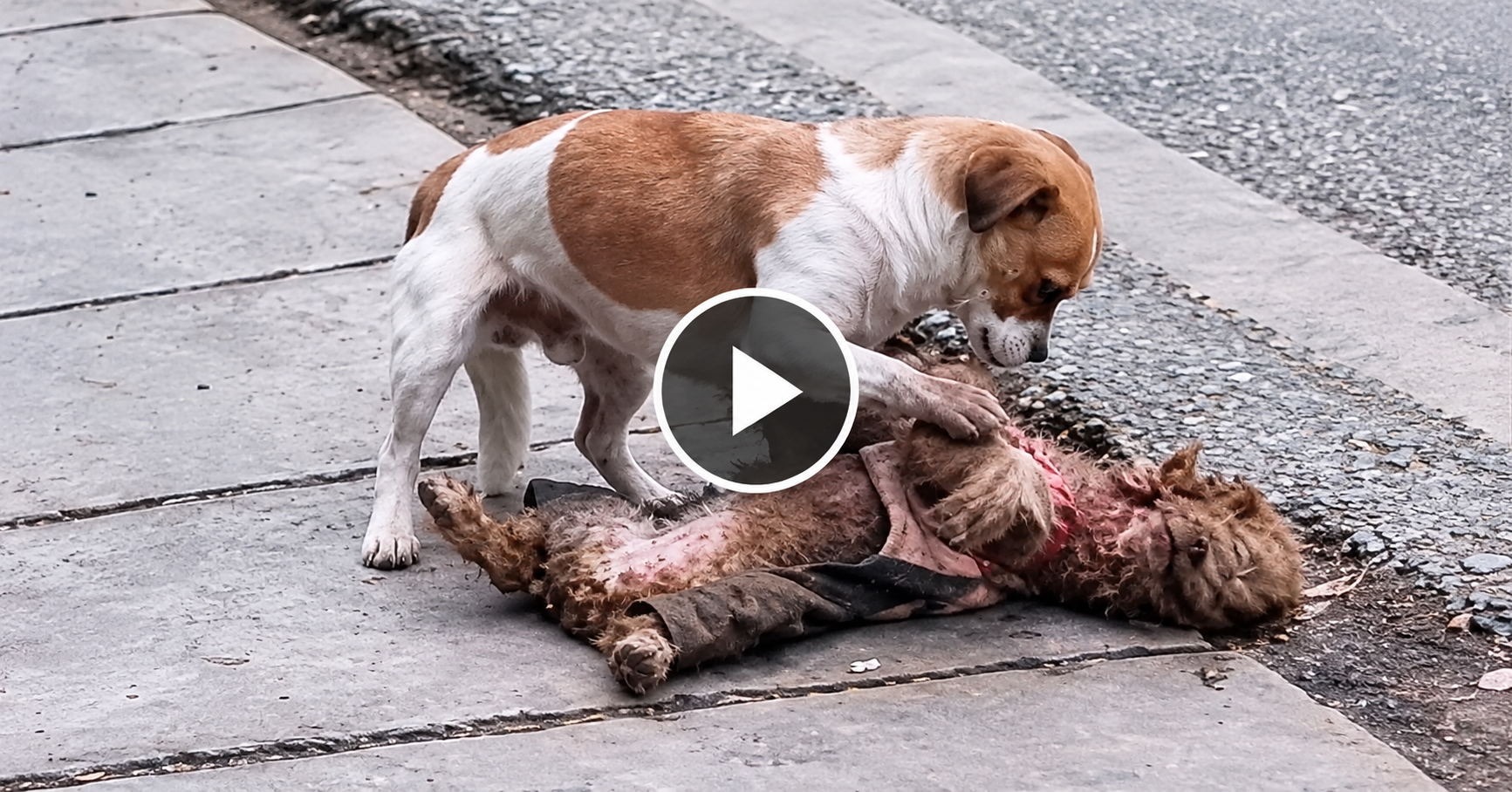
The bond between animals can be difficult to understand fully, yet moments of companionship often reveal how closely they may become attached to one another. A video described as showing a small dog staying beside its companion after a traffic accident has drawn attention to the emotional connections that can develop between dogs. Rather than moving away, the surviving puppy reportedly remained nearby for an extended period, creating a poignant reminder of the importance of compassion toward animals in vulnerable situations.
According to the description accompanying the footage, one puppy was struck by a vehicle and did not survive, while its companion stayed close and appeared reluctant to leave. The available description does not establish every detail surrounding the accident, the dogs’ relationship, or what happened afterward. Nevertheless, the situation highlights two important concerns: the safety of animals near roads and the responsibility people share to respond carefully when an animal is injured or in distress.
Dogs are social animals that can form strong relationships with other dogs and with the people who care for them. When two puppies spend time together, they may develop familiar routines through playing, resting, exploring, and seeking comfort from one another. If one suddenly disappears from their shared environment, the other may remain nearby because the situation is unfamiliar or confusing, although the exact emotions an animal experiences cannot be determined from a video alone.
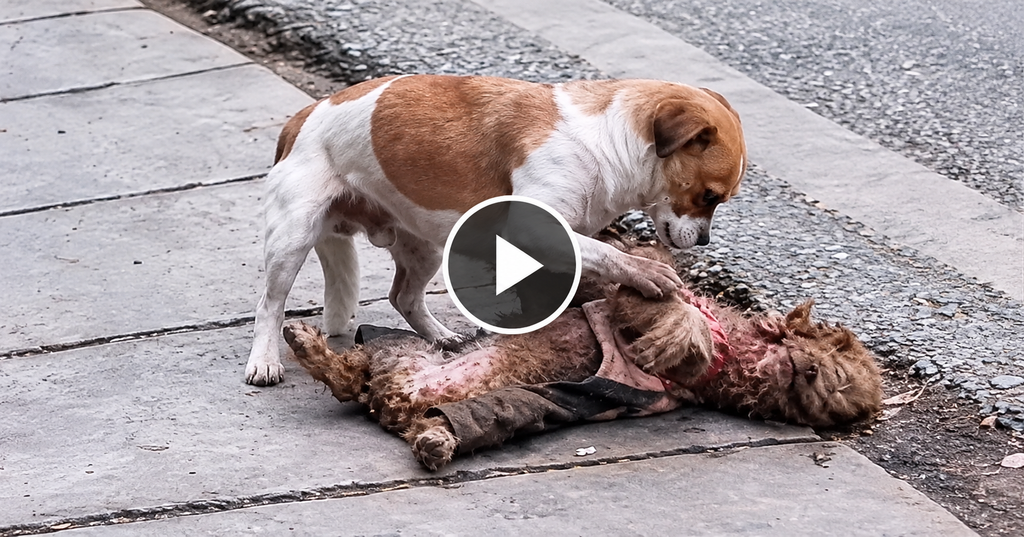
A dog staying beside another animal after an accident can be an especially difficult sight for viewers. People naturally interpret such behavior through their own experiences of friendship, attachment, and loss. While it is important not to assume that dogs understand death in exactly the same way humans do, their social behavior and responses to changes in their companions can demonstrate how meaningful these relationships may be.
For a young puppy, the world is still a place of constant discovery. Roads, moving vehicles, unfamiliar sounds, and busy surroundings can create risks that an inexperienced animal may not recognize. Puppies that wander freely near traffic are particularly vulnerable because they may react suddenly to movement or follow another animal without understanding the danger.
Preventing road accidents involving pets begins with responsible supervision. Dogs should be kept in secure areas and accompanied by an attentive handler when walking near roads. A properly fitted leash and harness, together with up-to-date identification, can help owners maintain control and improve the chances of recovering a dog if it becomes separated from them.
Drivers also play an important role in protecting animals. Reducing speed in residential areas, paying attention near parks and roadside spaces, and remaining alert to animals that may enter the road can help prevent avoidable accidents. Even a moment of caution may give a driver more time to respond when a dog or another small animal appears unexpectedly.
When an accident involving an animal occurs, the first priority should be safety. People should avoid standing in active traffic or approaching a frightened animal without considering the risk of another collision. If the dog is injured, contacting a veterinarian, local animal rescue service, or appropriate emergency responder can help ensure that assistance is provided as safely and quickly as possible.
An injured dog may behave unpredictably because of fear or pain, even if it is usually friendly. Anyone trying to help should approach carefully and follow professional guidance rather than attempting a risky intervention. If the animal is in the roadway, securing the surrounding area and seeking trained assistance may be safer than immediately attempting to move it.
The surviving puppy in the described footage also raises an important question about the care animals may need after a frightening event. A dog that remains near an injured or deceased companion may be confused by the sudden change in its surroundings. Providing a quiet, secure environment and monitoring the animal’s behavior can help caregivers determine whether additional veterinary or behavioral support is needed.
Dogs communicate through body language, sounds, and changes in their usual behavior. Following a stressful incident, some may become unusually quiet, seek additional attention, pace, or appear hesitant in familiar situations. These behaviors do not necessarily mean an animal is experiencing grief in the same way a person would, but they can indicate stress and deserve a patient, compassionate response.
For households caring for more than one dog, familiar routines can provide a sense of stability after a difficult experience. Regular feeding times, gentle interaction, appropriate exercise, and a comfortable resting place may help an animal settle back into daily life. If concerning behavior persists or the dog shows signs of illness, a veterinarian can offer guidance and assess whether further support is necessary.
The story also reminds communities that stray and free-roaming dogs face challenges that household pets may avoid. Animals living near busy roads may have limited access to safe shelter, reliable food, and veterinary care. Community programs that promote responsible ownership, identification, sterilization where appropriate, and humane animal welfare services can help reduce risks and improve the lives of vulnerable dogs.
Sharing information about animal accidents can encourage people to take road safety more seriously, but it is important to do so respectfully. Graphic images and sensational language are not necessary to explain the consequences of an accident or motivate people to act responsibly. A thoughtful account can focus on prevention, practical assistance, and the value of treating animals with dignity.
It is also important to remember that short videos rarely tell the complete story. Viewers may not know whether the dogs were siblings, how long they had been together, or whether anyone subsequently provided assistance. Avoiding unsupported assumptions allows the central message to remain clear without turning an uncertain situation into a more dramatic story than the available information supports.
For anyone who encounters a stray puppy near a road, small steps can help protect it. Where it is safe to do so, contacting a local rescue organization or animal welfare group may provide a practical way to arrange assistance. Communities can also help by reporting dangerous locations, supporting humane rescue programs, and encouraging neighbors to keep pets away from traffic.
The relationship between dogs and their companions often becomes visible through simple everyday actions. They may follow each other during walks, rest side by side, or look for one another when separated. Such behavior can be deeply moving because it reflects the social nature of dogs and reminds people that animals are not simply passing through our lives; they are living beings that deserve protection and thoughtful care.
Although the puppy’s eventual condition and the full circumstances of the incident are not confirmed by the available description, the footage offers an opportunity to reflect on both compassion and prevention. The surviving dog deserves a safe environment and appropriate care, while the incident reminds drivers and pet owners to remain vigilant around roads. When communities respond with practical action rather than speculation, they can help reduce the chance of similar accidents affecting other animals.
Ultimately, the most useful lesson is that protecting animals begins long before an emergency occurs. Responsible supervision, safer driving, and access to veterinary and rescue services can all make a meaningful difference. By recognizing the bonds dogs form with one another and taking their safety seriously, people can help create communities where more animals have the opportunity to live secure, healthy lives surrounded by care.