
For more than 25 years, Pai Lin carried what no elephant should. Day after day, a heavy metal frame strapped to her back, five or six tourists at a time, step after step beneath the burning sun.
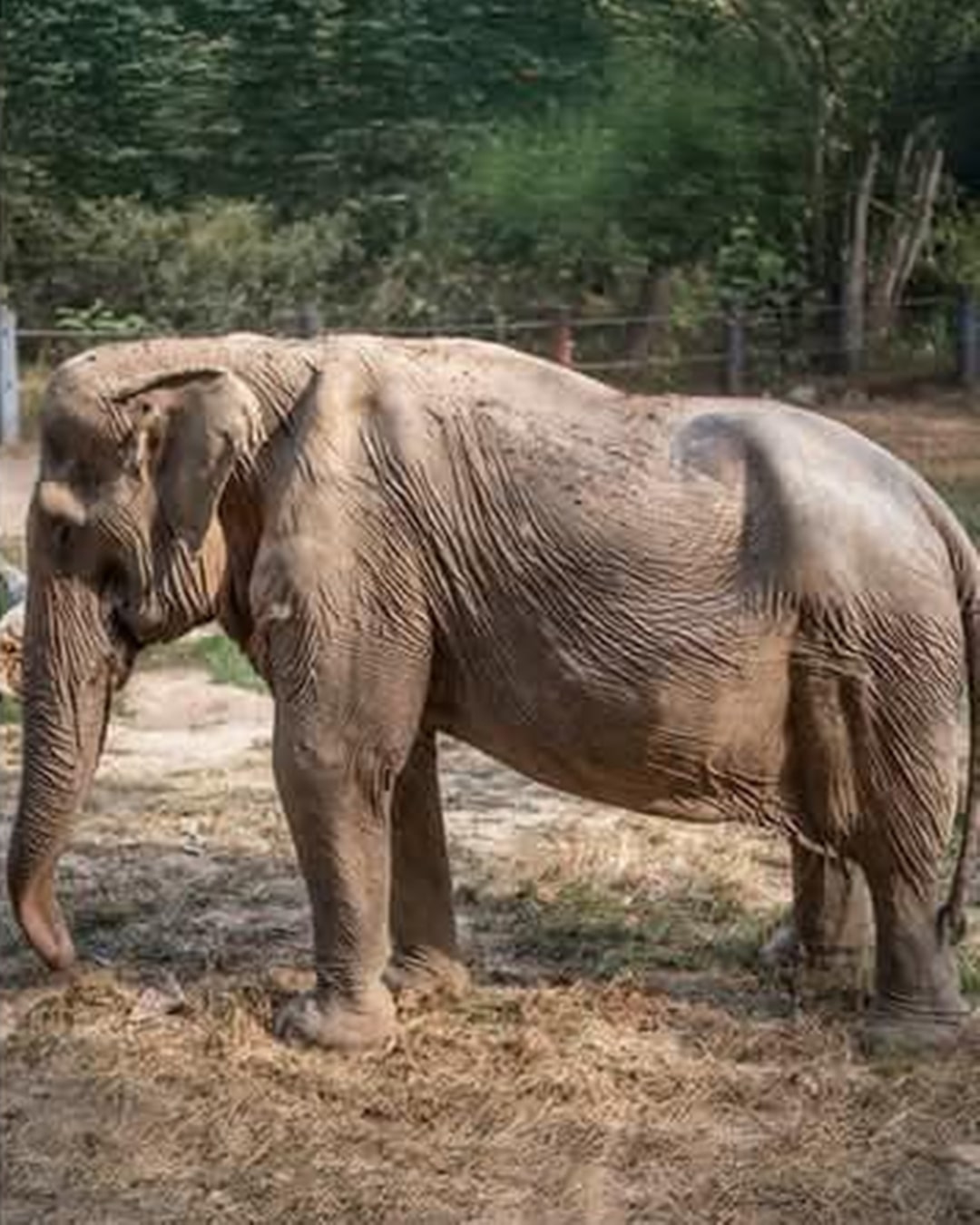
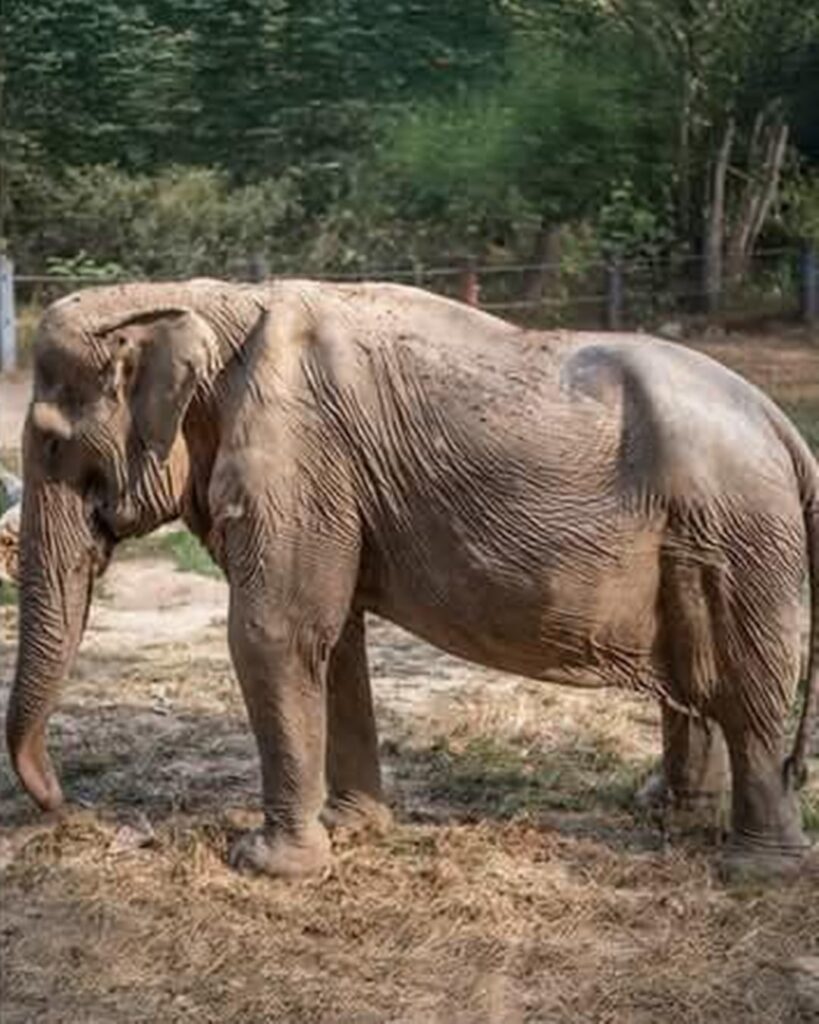
For them, it was minutes of joy. For her, it was a lifetime of pain. Her skin scarred, her legs swollen, her body frail. Her once-strong spine collapsed inward, leaving a deep dent—a permanent mark of decades of exploitation.
In 2007, everything changed. Pai Lin was rescued and given what she had never truly known: freedom. No more chains, no more saddles. Just open fields, shade under trees, and the chance to simply be an elephant again.
Now in her late seventies, her scars remain, but her suffering is over. She carries no one but herself.
Her story is a reminder: what looks like a harmless ride can mean years of hidden cruelty.
Pai Lin’s story is not an isolated incident; it is the visible wound of a vast, often misunderstood industry built on the suffering of intelligent, sentient beings. To understand her journey to freedom, one must first confront the brutal reality of how an elephant is made to carry tourists. The process begins in infancy. Wild baby elephants are often stolen from their mothers—a traumatic event that frequently results in the mother being killed while trying to protect her calf. This begins a life defined by loss and fear. The young elephant is then subjected to a horrific ritual known as “phajaan,” or “the crush.” This is the systematic breaking of the animal’s spirit through starvation, sleep deprivation, and physical torture. Confined in a small cage, the calf is beaten into submission until it learns to fear its human captors and obey their commands without question. This is the dark secret behind the seemingly docile giant that kneels for a photograph or allows a tourist to climb onto its back. The obedience is not a sign of friendship; it is a symptom of deep-seated trauma.
For Pai Lin, this brutal conditioning was followed by a quarter-century of relentless labor. The physical toll of this work is immense and often irreversible. Contrary to popular belief, an elephant’s spine is not designed to support weight from above. The vertebrae are protruding bony processes, and the constant pressure from a heavy saddle, combined with the weight of multiple adults, causes agonizing pain and, as in Pai Lin’s case, permanent skeletal deformity. Her sunken spine is a grotesque testament to this biological fact. Beyond the spinal damage, elephants in the trekking industry suffer from debilitating foot problems from walking on unnatural surfaces, skin infections from the chafing of straps, and exhaustion from being forced to work long hours in extreme heat with inadequate food and water. They are living, breathing machines in a business that prioritizes profit over animal welfare.
The psychological damage is just as profound. Elephants are profoundly social creatures, forming complex family bonds that can last a lifetime. In the wild, they roam vast distances, communicate in intricate ways, and display behaviors that indicate empathy and grief. The life of a trekking elephant is a complete negation of this innate nature. Chained, isolated, and forced into a repetitive, monotonous existence, they suffer from a condition akin to complex post-traumatic stress disorder (C-PTSD). The spark in their eyes dims, replaced by a look of weary resignation. They are denied every natural instinct: the freedom to forage, to bathe in a river at will, to nurture their young, or to simply stand in the quiet company of their own kind. Pai Lin’s rescue was not just a release from physical chains; it was an opportunity for her soul to begin the long, slow process of healing.
Her arrival at the sanctuary marked the dawn of a new existence. Here, the language of bullhooks and commands was replaced by one of patience and kindness. For the first time in decades, she could feel soft earth beneath her feet instead of scorching pavement. She could choose when to eat, where to walk, and with whom to socialize. The recovery journey for rescued elephants like Pai Lin is often slow. They must relearn how to be elephants. Many are initially wary of humans and even other elephants, their past trauma making them fearful and defensive. But sanctuaries provide a safe space where these animals can form new herds, forging bonds with fellow survivors who understand their past suffering. Watching Pai Lin graze peacefully or interact with another elephant is to witness a quiet miracle—the rediscovery of a life that was stolen from her. Her physical scars, especially the deep concavity of her back, will never fade, but they now serve a different purpose. They are no longer just marks of cruelty, but a powerful symbol for change.
Pai Lin’s legacy is a crucial call to action for travelers and the tourism industry worldwide. Her story forces us to look beyond the curated vacation photo and question the ethical cost of our entertainment. Responsible tourism is the key to ending this cycle of abuse. It involves educating ourselves and making compassionate choices. Ethical elephant encounters do exist, but they look very different from the traditional trekking camps. True sanctuaries do not offer riding, circus-like performances, or any activity that forces elephants into unnatural behaviors. Instead, they prioritize the animals’ well-being, allowing them to live in a semi-wild environment with minimal human interference. A visit to an ethical sanctuary allows you to support their conservation efforts while observing these majestic animals in a way that respects their autonomy. You might watch them forage from a distance, see them bathe in a river on their own terms, or help prepare their food. This is the future of elephant tourism—one that values the life of the animal over the fleeting amusement of a human.
Pai Lin now lives out her twilight years in peace, a grande dame who has survived the unimaginable. She carries the history of her exploitation on her very bones, but her spirit remains unbroken. Her story has traveled the globe, opening eyes and changing minds. She is a silent ambassador for the thousands of elephants still trapped in the tourism industry, her deformed back a stark and unforgettable visual argument against elephant riding. By sharing her story and making informed decisions, we can collectively shift the demand from cruel exploitation to compassionate conservation. We can ensure that future generations of elephants will never know the crushing weight of a saddle, only the freedom of an open sky. Pai Lin carries no one now, but in a profound way, she carries the hopes of her entire species.
For more than 25 years, Pai Lin carried what no elephant should. Day after day, a heavy metal frame strapped to her back, five or six tourists at a time, step after step beneath the burning sun. For them, it was minutes of joy. For her, it was a lifetime of pain. Her skin scarred, her legs swollen, her body frail. Her once-strong spine collapsed inward, leaving a deep dent—a permanent mark of decades of exploitation. In 2007, everything changed. Pai Lin was rescued and given what she had never truly known: freedom. No more chains, no more saddles. Just open fields, shade under trees, and the chance to simply be an elephant again. Now in her late seventies, her scars remain, but her suffering is over. She carries no one but herself. Her story is a reminder: what looks like a harmless ride can mean years of hidden cruelty.