





As heavy rain continued to raise water levels across a quiet neighborhood, an ordinary day quickly turned into a challenging situation for both people and animals. Streets that had once been safe pathways became covered by fast-moving floodwater, forcing residents to seek higher ground while keeping a close watch on their loved ones. Among those facing the unexpected danger was a mother dog whose determination to protect her young would soon capture the attention of everyone nearby. Her actions became a touching reminder that parental devotion can be found throughout the animal kingdom.

The flooding developed rapidly after several hours of continuous rainfall. Small drainage canals overflowed, and water spread into nearby yards, parks, and roads. Residents were busy moving valuable belongings indoors and helping elderly neighbors reach safer locations. During the confusion, few people noticed that a small family of stray dogs had been living beneath a wooden platform close to the edge of the rising water.
The mother dog had chosen the sheltered space several weeks earlier after giving birth to a healthy litter of puppies. It provided shade from the summer heat and protection from strong winds during the night. Although life as a stray was never easy, she had managed to keep her puppies warm, clean, and well-fed by searching for food each day while remaining close enough to respond whenever they called. The simple shelter had become the center of her world.
As floodwater continued to rise, the once-safe hiding place quickly became surrounded. The puppies were still too young to understand the danger, remaining close together as the water crept higher around them. Their mother circled the area repeatedly, searching for a secure path that would allow her to move each puppy to safety. The current was becoming stronger with every passing minute, leaving her with very little time to act.
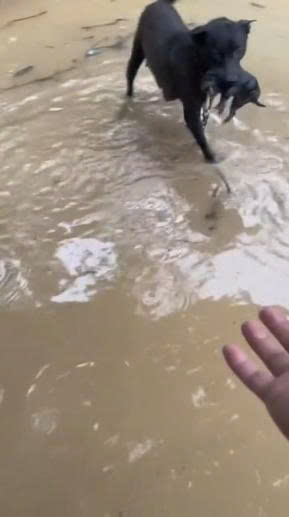
Without hesitation, the mother dog entered the cold floodwater and carefully approached her puppies. One by one, she gently lifted each puppy by the loose skin around its neck, the same natural method dogs use to carry their young. She moved slowly through the water, balancing carefully against the current before placing each puppy on a dry patch of higher ground several meters away. After every successful trip, she immediately returned for another puppy.
Several local residents eventually noticed the remarkable scene from nearby homes. At first, they were concerned that the current might be too powerful for the dog to overcome. However, they were equally amazed by her determination, as she repeatedly crossed the flooded area despite the difficult conditions. Every journey required patience, strength, and careful judgment, yet she never appeared willing to give up until every puppy had been moved.
One witness later shared that the mother dog paused briefly after placing each puppy in safety, checking carefully to make sure it remained calm before returning to rescue another. The puppies instinctively stayed close together, waiting quietly as their mother continued her work. Even though they were too young to fully understand the situation, they appeared comforted simply by her presence.
As more neighbors gathered, several people began looking for safe ways to assist without creating additional risk. Some residents brought towels and blankets to prepare a dry resting place once the puppies had all been rescued. Others searched for pieces of wood and sturdy containers that could be used if the water rose even further. Everyone understood that helping safely was more important than acting too quickly.
Fortunately, by the time the final puppy had been carried to higher ground, the water had not yet reached the temporary refuge chosen by the mother dog. Exhausted from the repeated trips, she lay beside her puppies while gently nudging each one to make sure they were comfortable. The puppies responded by gathering closely around her, creating a peaceful moment after an incredibly stressful experience.
The emotional rescue quickly became a topic of conversation throughout the neighborhood. Residents who had witnessed the event spoke not only about the courage of the mother dog but also about the remarkable instincts that many animals display when caring for their young. Stories like this often remind people that animals experience strong family bonds and protective behaviors that have developed over thousands of years through natural survival instincts.
Animal behavior specialists have long observed that mother dogs are highly attentive during the first weeks after giving birth. They continuously monitor their puppies, keeping them warm, feeding them, cleaning them, and relocating them whenever they sense potential danger. This protective behavior is especially noticeable when environmental conditions suddenly change, such as during storms, wildfires, or flooding. Their responses are driven by powerful maternal instincts that prioritize the safety of their offspring above all else.
Experts also explain that dogs are surprisingly skilled at evaluating their surroundings during emergencies. They often recognize unfamiliar sounds, changing water levels, and shifting ground conditions before humans notice the same warning signs. While not every situation results in dramatic rescues, countless examples have demonstrated that animals frequently adapt quickly when protecting themselves and their families.
The rescue also highlighted the growing challenges that stray animals face during periods of severe weather. Without permanent shelter or consistent access to food, stray dogs and cats are especially vulnerable when storms arrive unexpectedly. Flooded streets can separate animal families, contaminate food sources, and eliminate the few safe places where they normally rest. Community awareness becomes particularly important during these situations.
Many animal welfare organizations encourage residents to keep an eye on neighborhood animals during periods of extreme weather. Simple actions such as providing temporary shelter, fresh drinking water, or contacting local rescue groups can significantly improve an animal’s chance of remaining safe. Even small efforts by individuals often make a meaningful difference during natural disasters.
Following the rescue, several neighbors decided they wanted to help the little family beyond the immediate emergency. Fresh food and clean water were provided while volunteers contacted a local animal rescue organization for additional support. The goal was not only to ensure the puppies recovered from the stressful experience but also to help the mother dog receive proper medical attention and eventually find a permanent home.
The rescue group that later arrived praised the community for responding calmly and responsibly. Volunteers carefully examined the puppies, confirming that despite being tired and slightly wet, they appeared healthy overall. The mother dog was equally cooperative, remaining close to her puppies while allowing rescuers to complete their health checks. Her calm behavior suggested she understood that the people around her were trying to help.
News of the remarkable rescue soon spread through social media, where thousands of people expressed admiration for the mother’s determination. Many viewers commented that the story reminded them of similar experiences involving family pets who had displayed extraordinary loyalty during emergencies. Others simply appreciated seeing a positive story that celebrated compassion instead of focusing only on disaster.
While dramatic moments often attract public attention, experts emphasize that the true lesson lies in preparedness. Communities that develop emergency plans for both people and animals are generally better equipped to respond when severe weather occurs. Including pets and local animals in disaster planning helps reduce unnecessary risks and allows rescue efforts to proceed more efficiently.
Animal rescue organizations also recommend preparing emergency kits for household pets before storm seasons begin. These kits typically include food, clean water, medications, identification information, leashes, carriers, and basic first-aid supplies. Having these items ready allows families to evacuate quickly without leaving beloved companions behind during emergencies.
For communities with significant stray animal populations, cooperation between local authorities, volunteers, and rescue organizations can greatly improve emergency response. Temporary shelters, coordinated feeding programs, and accessible veterinary care help protect vulnerable animals when disasters strike. Public education also encourages greater understanding of responsible and compassionate ways to assist animals safely.
Although the flood eventually began to recede, the memory of the mother’s courage remained with those who witnessed her rescue. Her determination inspired neighbors to become more involved in supporting local animal welfare efforts, turning one difficult day into the beginning of a stronger sense of community responsibility. Several residents even discussed organizing future volunteer programs to assist stray animals during severe weather events.
The story ultimately serves as a gentle reminder that acts of care and devotion can appear in unexpected places. The mother dog never sought attention or recognition; she simply responded to the needs of her puppies with remarkable determination. Her actions reflected one of nature’s most universal qualities—the instinct to protect family during times of uncertainty. As communities continue facing unpredictable weather around the world, stories like this encourage compassion, preparedness, and respect for the incredible resilience shared by both people and animals.