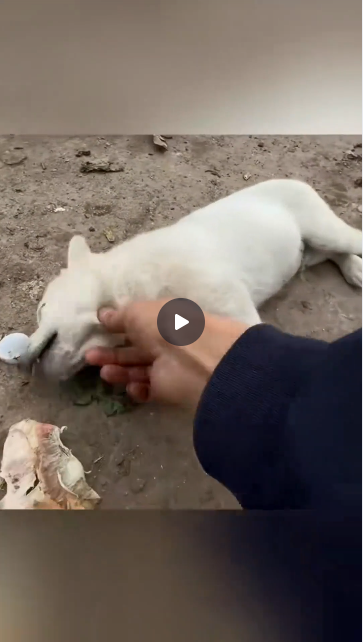


Behind an old concrete wall, on a patch of ground covered with dry leaves, broken branches, and scattered debris, a fragile white dog lies quietly. Its once-fluffy coat appears severely damaged, with large areas of missing fur exposing irritated-looking skin. The dog’s body is stretched across the uneven ground, and a metal chain can be seen nearby. A short video captures the animal slowly lifting its head and looking toward the camera, creating a deeply concerning picture of a dog that may urgently need care.
The recording begins with a wide view of the outdoor location. The dog is lying close to a weathered wall made from rough concrete blocks and stones. Green plants and branches grow above and around the structure, while the ground beneath the animal is covered with dry leaves, twigs, and patches of bare soil. It is not a comfortable-looking place for an animal to rest.
The dog has a light cream or white coat, but much of its fur appears thin, tangled, or missing. Several areas across its body show visible redness and changes in the skin. Its legs and underside also appear affected, while its tail retains longer strands of pale fur. The contrast between the remaining fluffy coat and the exposed patches makes its condition particularly noticeable.
At first, the dog lies on its side with its body extended across the ground. Its head rests slightly above the surface, and its eyes are open. It does not immediately attempt to stand. The camera moves closer, revealing more details of the animal’s face and body.
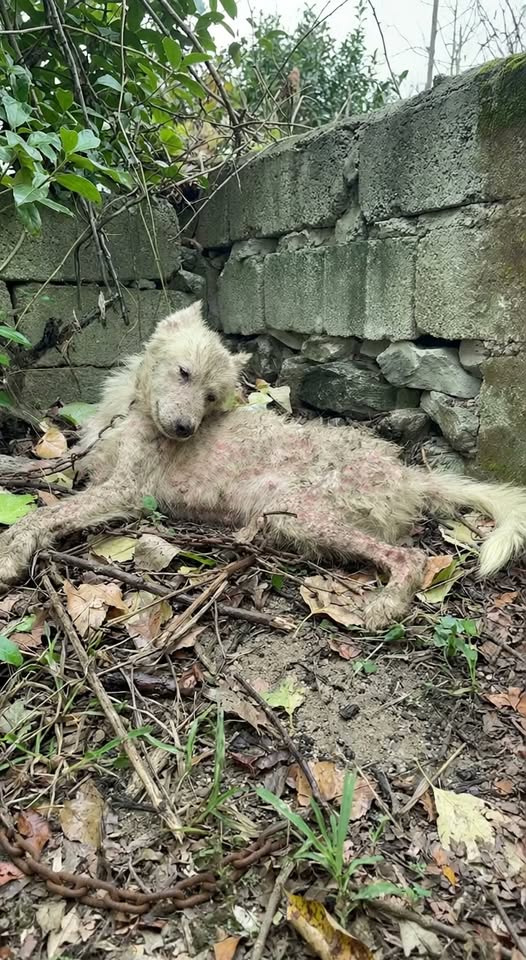
The dog’s expression is quiet and subdued. Its ears are lowered, and its eyes follow the person filming. After a short moment, it slowly raises its head, turning its face toward the camera. This small movement confirms that the dog is responsive during the recording, although its overall physical condition remains concerning.
A metal chain is visible on the ground near the dog. The footage does not clearly establish whether the chain is attached to the animal or how it may have been used. Nevertheless, its presence adds another detail to the scene and raises questions about the dog’s living conditions.
As the camera approaches, the skin changes become easier to see. The dog’s body has several patches where the fur is sparse or absent. Some areas appear pink or reddish, while others look rough and irritated. The video does not provide enough information to identify the cause, and it would be inappropriate to diagnose a specific disease based only on these images.
Hair loss and skin irritation in dogs can have many possible causes. Parasites, fungal infections, bacterial skin problems, allergies, hormonal conditions, and other medical issues may produce changes in the coat and skin. In some cases, more than one problem may be present at the same time. A veterinarian would need to examine the dog and possibly perform tests to determine what is happening.
The animal’s general appearance also deserves attention. Its body looks thin, and it remains lying on the ground for much of the clip. Although the recording does not establish whether the dog is weak, in pain, or simply resting, its visible skin problems and subdued behavior make a professional assessment important.
When a dog experiences extensive hair loss or skin irritation, the discomfort can affect many aspects of daily life. Persistent itching may make it difficult to rest, while damaged skin can become vulnerable to additional infection. If the animal is also undernourished or living in an unsuitable environment, recovery may become even more challenging.
The surroundings shown in the video do not appear especially protective. The dog is resting on soil covered with leaves and branches, beside a rough concrete wall. There is no clearly visible clean bedding, food bowl, or water container in the immediate area. The recording does not show the full location, so it is impossible to know whether the dog has access to other shelter or care nearby.
As the camera moves around the animal, the dog continues to make small movements. It turns its head and looks toward the person filming, while its body remains on the ground. Its pale face and dark eyes are clearly visible against the background of gray concrete and green vegetation.
The moment is difficult to watch because the dog appears so vulnerable. An animal with extensive skin problems may need more than a quick bath or a change of food. Some skin conditions require specific medication, parasite treatment, or carefully managed veterinary care. Using random products or human medicines without professional advice could make certain conditions worse.
If the dog is still in this location, the most helpful next step would be to arrange a veterinary examination. A veterinarian can assess the skin, check for parasites or infection, evaluate the animal’s body condition, and determine whether it needs additional treatment. The dog may also benefit from a clean, dry, sheltered resting area while its condition is being evaluated.
Anyone attempting to help should approach carefully. A dog that is uncomfortable, frightened, or in pain may react defensively, even if it is usually gentle. Speaking softly, avoiding sudden movements, and asking an experienced rescuer or veterinarian for assistance can make the process safer. If the animal is attached to a chain or otherwise difficult to move, trained help is especially important.
Proper nutrition and hydration may also play an important role in recovery. A dog with poor skin and coat condition should have access to clean drinking water and a balanced diet suitable for its age and health. However, if the animal is severely underweight or has been unwell for a long time, its feeding needs should be assessed by a professional rather than addressed through sudden changes.
The video also reminds viewers that skin disease is not always immediately obvious in its early stages. Small areas of hair loss, persistent scratching, redness, or changes in the skin can develop into more extensive problems if the underlying cause is not addressed. Regular observation and timely veterinary care can help prevent avoidable discomfort.
It is important, however, not to assume the dog’s history from the short recording. The video does not reveal whether the animal has an owner, how long it has been in this location, or whether it has already received medical attention. It does not establish that the dog was abandoned or deliberately mistreated. The visible condition is concerning, but the circumstances behind it remain unknown.
What the footage does show is a dog with widespread areas of hair loss and visibly altered skin, lying on an exposed patch of ground beside an old wall. It slowly raises its head and looks toward the camera, remaining in the same general position until the recording ends. Those details are enough to make its welfare an important concern.
For animal lovers, the dog’s quiet gaze may be the most memorable part of the clip. It does not make any dramatic movement or approach the person filming. Instead, it simply looks toward the camera while lying among the leaves and branches. The moment encourages viewers to think about animals whose medical needs may go unnoticed.
Animal welfare is not only about providing food and shelter. It also means recognizing when an animal is unwell and making sure it receives appropriate treatment. A dog with extensive skin problems deserves a proper examination, relief from discomfort, and a safe environment where it can recover.
Communities can help by sharing accurate information with local rescue groups, supporting responsible animal-care organizations, and encouraging owners to seek veterinary attention when problems appear. Even a simple report about an animal in need may help connect it with someone who has the experience to provide assistance.
The white dog in this video deserves more than sympathy. It deserves the opportunity to receive proper care, have its skin condition investigated, and rest somewhere clean and protected. Its future cannot be predicted from a short recording, but timely assistance could make an important difference.
As the clip ends, the dog remains beside the old wall, its head lowered after briefly looking toward the camera. The image leaves viewers hoping that someone will notice its condition and help it reach a safer place. Behind its damaged coat and tired appearance is an animal whose life matters and whose needs deserve attention.
Sometimes, the first step toward a better outcome is simply refusing to look away. With compassion, responsible veterinary care, and a little help from the people around it, this fragile dog may have a chance to experience comfort and safety again.