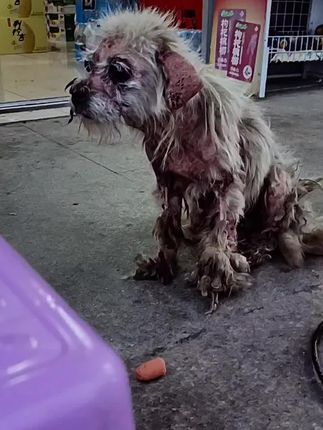

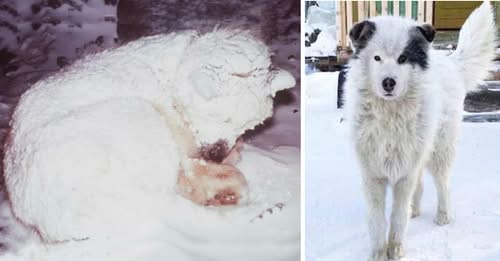

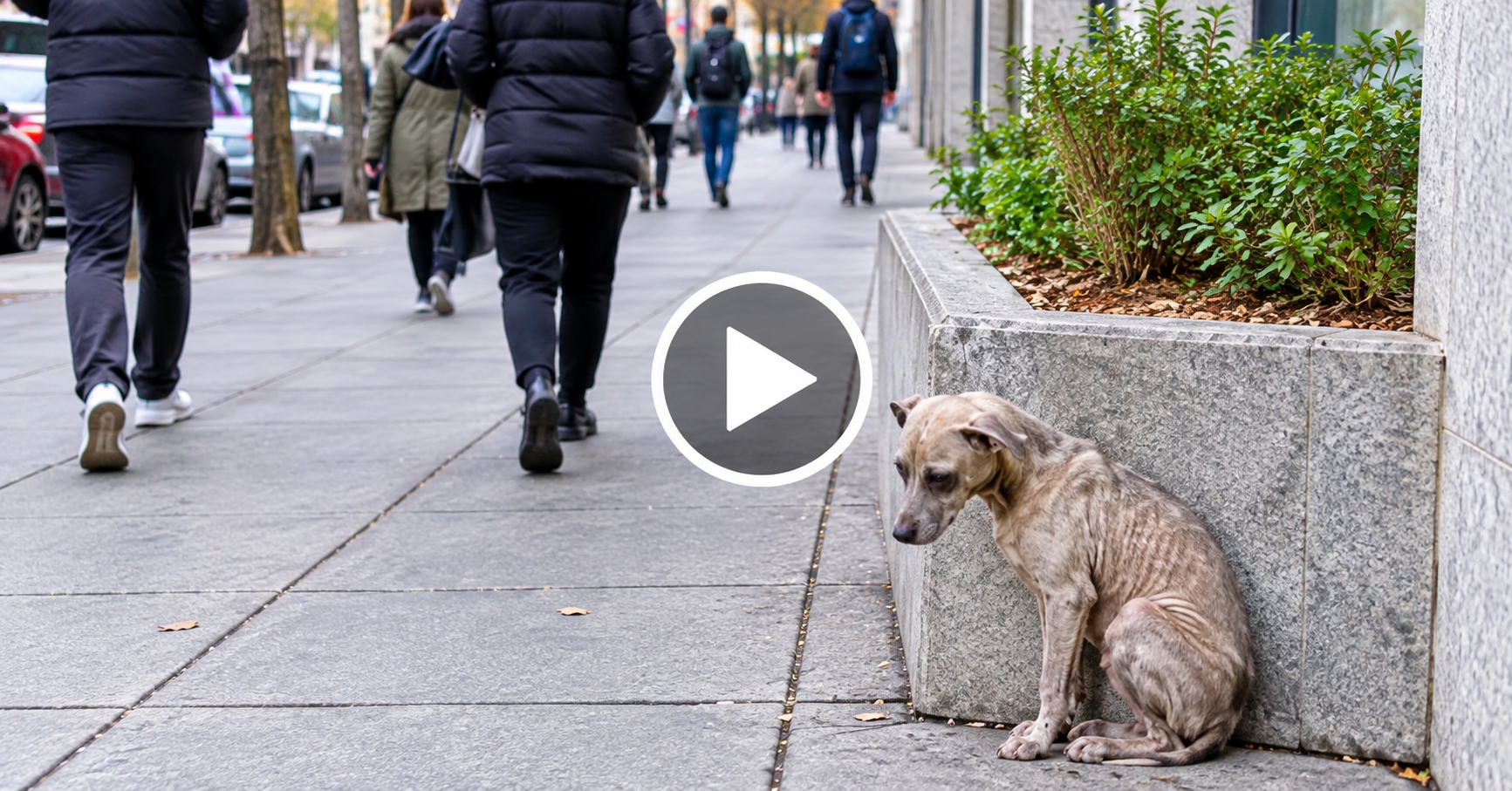
A quiet but emotional scene captured by a street surveillance camera shows a small dog sitting alone beside a building while pedestrians walk past. The animal has very little visible fur, and its pale, patchy skin makes its fragile appearance immediately noticeable. People continue along the sidewalk, some passing relatively close, while the dog remains seated near the wall. The footage later shifts to a much more comforting indoor scene, where a fluffy cream-colored dog stands on a rug and approaches a person’s outstretched hand. Together, these moments suggest a story of compassion and a possible journey toward a safer environment.
At the beginning of the recording, the dog is sitting on the concrete pavement beside a raised planter. Its body is slightly hunched, and its legs are tucked close together as it rests near the edge of the building. The dog’s coat appears extremely sparse, with large areas of pale skin visible across its body, head, and legs. Its ears hang down on either side of its face, while its eyes seem to follow the activity taking place around it.
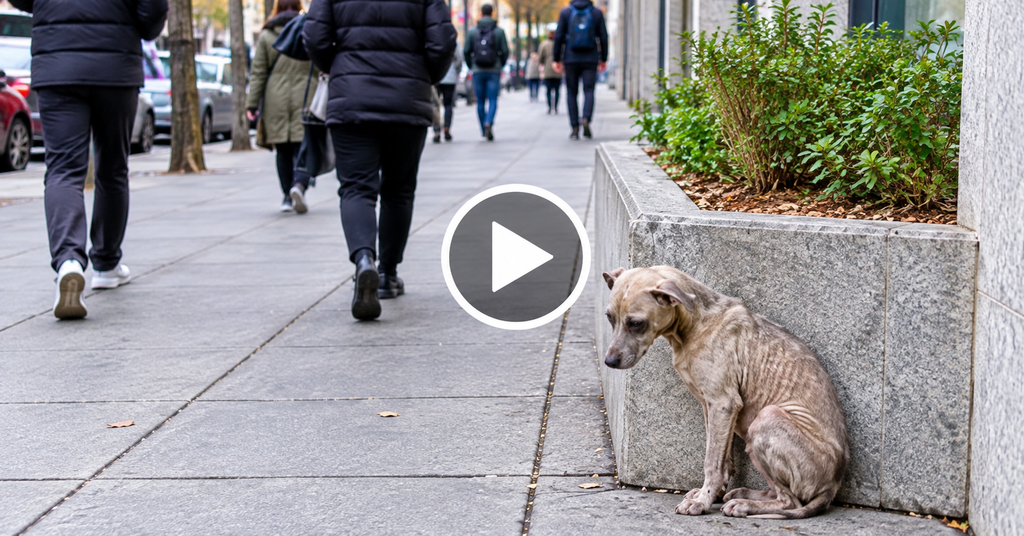
The location appears to be a public pedestrian walkway, with people moving in both directions throughout the clip. Some are walking alone, while others pass in pairs or groups. Their coats and clothing suggest cool outdoor conditions, although the exact temperature and weather cannot be established from the footage. Against this busy background, the little dog remains in almost the same spot, making the contrast between the movement of the crowd and its stillness particularly striking.
For several seconds, pedestrians pass without stopping. The dog does not appear to approach anyone or move toward the street. Instead, it stays close to the wall, occasionally turning its head as people walk by. Its position beside the building may offer some separation from the flow of foot traffic, but the pavement is still an exposed place for an animal that appears so vulnerable.
The dog’s unusual appearance naturally raises questions about its health. Extensive hair loss and visible skin changes can have many possible explanations, including skin disease, parasites, allergies, nutritional problems, or other medical conditions. However, the video does not provide a veterinary examination or any confirmed diagnosis. It would therefore be unfair to identify a particular illness based only on the animal’s appearance.
The most concerning detail is how little protection the dog seems to have while sitting outdoors. A healthy coat can help protect a dog from cold, moisture, sunlight, and minor irritation. When much of that coat is missing, the animal may need additional protection and a careful assessment of its skin and overall condition. A veterinarian would be best placed to determine what treatment, nutrition, or other support might be necessary.
As the recording continues, a person eventually approaches the dog. Unlike the pedestrians who have continued along the walkway, this individual stops and appears to pay attention to the animal. The camera captures the person coming closer, creating a noticeable change in the scene. For a dog that has spent much of the clip sitting alone, even this simple act of stopping represents a different kind of interaction.
The video then moves to a closer view of the dog. A person’s hand reaches toward it slowly, allowing the animal to see and approach the hand without being rushed. The dog remains seated and appears to accept the gentle attention. Rather than showing a sudden or dramatic reaction, the footage focuses on small movements and a quiet exchange between the animal and the person.
In one particularly touching moment, the person’s hands come close to the dog’s front paw. The animal allows the person to touch and hold it, while remaining near the ground. This brief interaction gives the scene a more personal feeling than the earlier surveillance footage. The dog is no longer simply a small figure at the edge of a busy sidewalk; it is now receiving direct attention from someone who has stopped to help.
The next sequence shows the dog being wrapped in a soft, light-colored blanket or coat. The fabric covers much of its body, leaving its head visible. The person supports the animal while adjusting the material around it, apparently trying to keep it warm and comfortable. For a dog with such sparse fur, an extra layer of protection may be especially valuable while it is being moved or cared for.
The dog’s head remains visible above the blanket, and it looks around as the person holds it. Its ears and facial features are easier to see in this closer shot. Although the clip does not show where the animal is taken immediately afterward, the change from sitting exposed on the pavement to being wrapped in warm fabric creates a hopeful moment. It suggests that someone has decided the dog should not simply be left alone on the sidewalk.
The footage then transitions away from the outdoor scene and into an indoor setting. A cream-colored, fluffy dog is standing on a woven rug in what appears to be a home. The room looks clean and sheltered, with a door, a small piece of furniture, and a plant visible in the background. The dog stands with its tail raised and its mouth slightly open, appearing alert and comfortable in the space.
A person’s hand reaches out toward the indoor dog. The animal responds by stepping closer and bringing its nose toward the hand. In another close-up, it gently investigates the person’s fingers. Its body language appears more relaxed than the still posture of the dog shown in the opening street footage. The contrast between the two settings gives the video an emotional sense of hope.
The editing invites viewers to interpret the indoor scene as a possible later chapter in the outdoor dog’s story. The first part shows a vulnerable animal exposed to the elements, while the final moments show a fluffy dog receiving friendly attention in a warm home. However, the recording does not establish whether the indoor dog is definitely the same animal, how much time may have passed between the scenes, or whether the change in appearance resulted from treatment and recovery. The safest interpretation is that the video presents a possible rescue or care journey without documenting every step.
If the two scenes do show the same dog, the indoor footage would represent a particularly encouraging development. A dog with extensive hair loss may need more than warmth and a comfortable place to rest. Proper veterinary care can help identify the cause of the skin condition, while a suitable treatment plan may include medication, parasite control, bathing products recommended by a professional, and adjustments to the animal’s diet. Recovery can take time, and the right approach depends on the underlying cause.
A safe environment is also an important part of caring for a vulnerable dog. A quiet room, clean bedding, fresh water, and nutritious food can provide a more stable setting while an animal receives attention. If its skin is irritated, it is important to avoid using random creams or household treatments that could make the condition worse. Professional guidance can help ensure that the dog receives care appropriate to its needs.
The street scene also offers a reminder about the importance of noticing animals in public places. A dog sitting quietly beside a wall may be easy for busy pedestrians to overlook, particularly when everyone is focused on reaching their destination. Yet an animal that appears unusually thin, has extensive hair loss, or seems unable to move comfortably may need assistance. A careful approach and a call to a local animal welfare group or veterinary clinic can be helpful when someone encounters a dog in such circumstances.
People should also remember that unfamiliar animals may be frightened or uncomfortable, even when they appear calm. Approaching slowly, avoiding sudden movements, and allowing the dog to see and smell an offered hand can help reduce stress. If the animal is weak or has painful skin, handling should be especially gentle. When possible, trained rescuers or veterinary professionals can advise on how to move it safely.
What makes this video memorable is the contrast between the dog’s surroundings at the beginning and the warmer atmosphere at the end. On the sidewalk, the animal sits quietly while the world moves around it. In the later indoor footage, a dog stands on a soft rug and responds to a person’s gentle attention. Even without knowing every detail behind the scenes, the difference between these images encourages viewers to think about how much a safe place and compassionate care can mean to an animal.
The little dog seen beside the wall deserves more than a moment of sympathy. It deserves an opportunity to have its health assessed, receive appropriate treatment, and live somewhere protected from the dangers of the street. If the final indoor scene represents its next chapter, it offers a welcome glimpse of the kind of comfort that every vulnerable animal should be able to experience.
Ultimately, the video is a reminder that kindness can begin with something very small: stopping, noticing an animal in need, and choosing to approach it with patience. A gentle touch or a warm blanket cannot solve every medical problem, but it can be an important first step toward getting help. Hopefully, the dog shown in these scenes is now receiving the care and protection it needs, with the chance to enjoy a healthier, safer, and happier life.